/ Blog detail
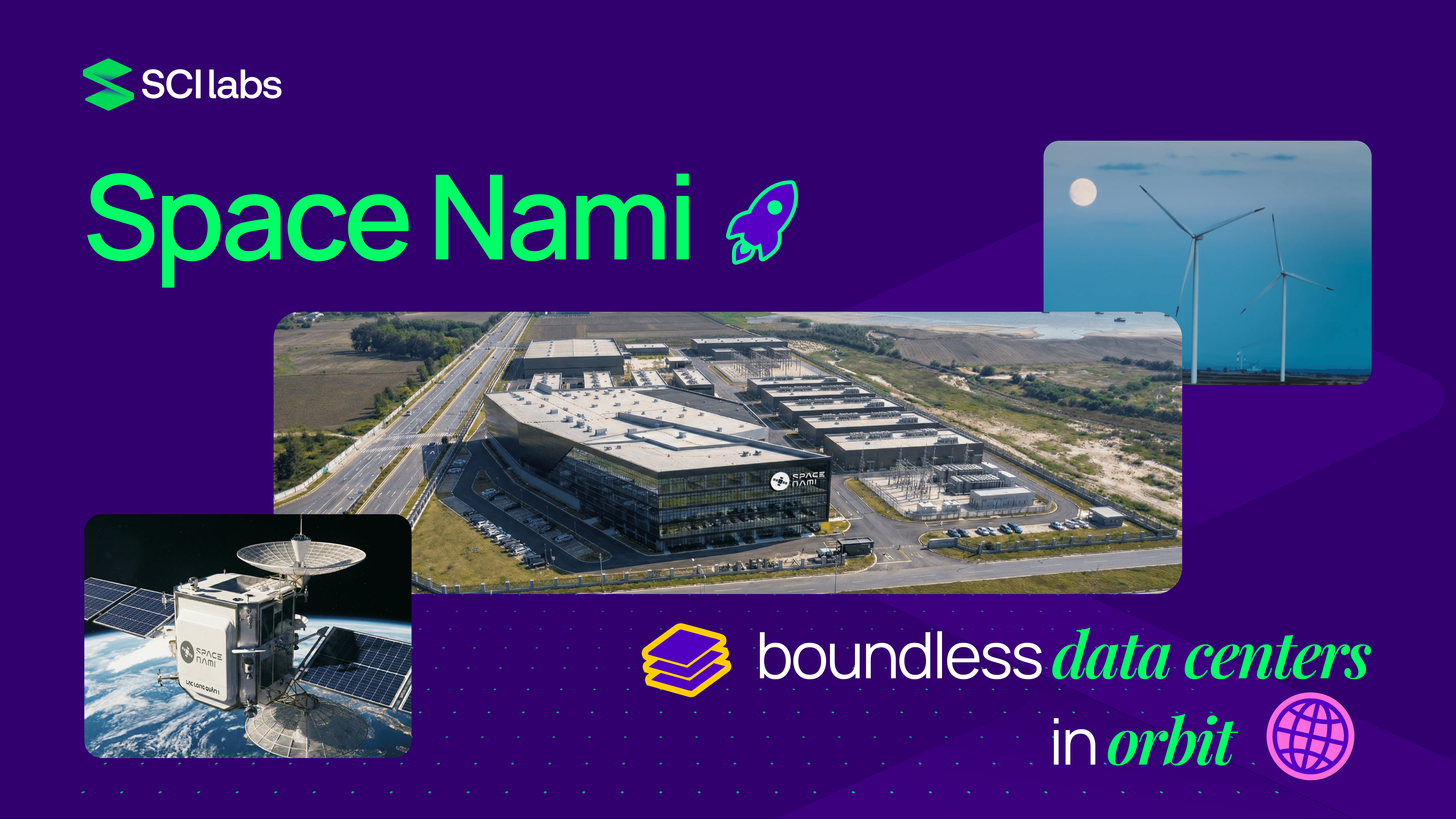
SPACE NAMI - BOUNDLESS DATA CENTERS IN ORBIT
/ Content

The rapid advancement of artificial intelligence is reshaping global technology infrastructure. As AI models grow exponentially, computational demand is surpassing the traditional scalability of terrestrial infrastructure, which is already under significant pressure from energy supply and cooling constraints.
With a vision to restructure the future of digital infrastructure, Space Nami is pursuing multiple strategic research and development directions. Among them, one of its breakthrough innovations is the development of hyperscale data centers in orbit — introducing a new infrastructure model for the AI era.
Beyond a technological solution, Space Nami pursues the ambition of exploring space and gradually transforming the Moon into “home” — not only for exploration missions, but also for the future digital infrastructure of humanity.
When Terrestrial Infrastructure Reaches Its Limits
For decades, data centers have been built and expanded on Earth, leveraging national power grids and conventional cooling solutions. However, this model is increasingly revealing its limitations.
Power grids in many developed regions are approaching or exceeding their designed capacity. Expanding energy supply is both capital-intensive and time-consuming, often requiring years to implement. At the same time, cooling costs continue to rise as computational density increases.
In parallel, regulatory barriers, land-use constraints, and lengthy permitting processes are slowing infrastructure expansion, making it increasingly difficult to keep pace with the rapid evolution of AI.
As next-generation AI systems move toward gigawatt-scale energy consumption, it is clear that the future of AI cannot rely solely on terrestrial infrastructure for sustainable growth.
About Space Nami
Space Nami is a deep-tech company building orbital hyperscale data centers designed to power the next generation of AI.
With a long-term vision to redefine digital infrastructure, Space Nami is advancing multiple strategic R&D directions. Among its most transformative innovations is the deployment of orbital computing clusters that leverage physical advantages unavailable on Earth.
This is not merely a geographic relocation of data centers, but a fundamental shift in operating model — one where energy generation and heat dissipation are optimized by the space environment itself.
Deploying Computing Infrastructure in Orbit
With the significant reduction in launch costs in recent years, deploying infrastructure in orbit is no longer science fiction.
Orbital data centers can harness continuous, high-intensity solar energy, reducing dependence on terrestrial power grids. At the same time, the vacuum of space enables natural radiative cooling, effectively addressing one of the most critical challenges of large-scale data center operations.
By combining these two advantages, Space Nami aims to build 24/7 gigawatt-scale computing clusters that are not constrained by terrestrial energy infrastructure, geographic limitations, or traditional construction regulations.
Mission and Vision
Space Nami’s mission is to redefine hyperscale by building an orbital computing infrastructure layer capable of meeting the long-term growth demands of global AI.
In the long term, space may become the next frontier for digital infrastructure, much like cloud computing once reshaped the Internet.
Space Nami represents a new direction for the digital infrastructure industry: expanding beyond the limits of Earth to support technological ambitions for decades to come.